
RxNote Read-Bench
On 130 real handwritten prescriptions from an Indian hospital, Gemini 4 Argon found the most medicines, 82%, ahead of Gemini 3.8 Flash at 79%, which costs about two thirds as much. When two models from different vendors must agree, the list is 93% correct.
By Amine El Farssi, co-founder and AI lead, RxNote
Version v2 · run 6 நவம்பர், 2026 · 529 pages · 10 models · 3 tracks
- 1Gemini 4 Argon$8.76 per 1,000 pages82%
- 2Gemini 3.8 Flash$5.51 per 1,000 pages79%
- 3Claude Opus 5.5$34.33 per 1,000 pages75%
Bars show 95% intervals over pages. Prices are list prices on the run date; the table shows each price after any introductory offer ends.
Leaderboard
130 pages of handwritten prescriptions and notes from an Indian hospital partner, 739 medicines in the key. Private: we publish scores only.
Medicines found is the share of the 739 medicines in the reviewed key that the model listed, after dosage form and strength are set aside; a name counts at 85% character similarity or better. Correct when listed is the share of the distinct names the model listed that the key confirms; the rest are misreadings and inventions together. Balanced (F1) combines the two, so a model cannot rank high by listing everything or by listing almost nothing. Bars show 95% intervals over pages.
- 1Gemini 4 ArgonGoogleMedicines found81.7%77.9%–85.4%
- Correct when listed
- 87.3%83.7%–90.4%87 of 684 unconfirmed
- Balanced (F1)
- 84.4%
- $ per 1,000 pages
- $8.76$17.52 after intro
- 2Gemini 3.8 FlashGoogleMedicines found79.2%75.3%–82.8%
- Correct when listed
- 85.6%82.1%–88.9%97 of 674 unconfirmed
- Balanced (F1)
- 82.3%
- $ per 1,000 pages
- $5.51$11.03 after intro
- 3Claude Opus 5.5AnthropicMedicines found75.1%70.7%–79.1%
- Correct when listed
- 81.5%78%–85%124 of 672 unconfirmed
- Balanced (F1)
- 78.2%
- $ per 1,000 pages
- $34.33
- 4GPT-6.1 TerraOpenAI (via Amazon Bedrock)Medicines found74.3%69.9%–78.6%
- Correct when listed
- 84.3%81%–87.5%101 of 644 unconfirmed
- Balanced (F1)
- 79%
- $ per 1,000 pages
- $5.76
- 5GPT-6.1 SolOpenAI (via Amazon Bedrock)Medicines found71.9%67.5%–76.2%
- Correct when listed
- 79.8%75.5%–83.4%133 of 658 unconfirmed
- Balanced (F1)
- 75.6%
- $ per 1,000 pages
- $10.29
- 6Gemini 3.1 ProGoogleMedicines found70.4%65.8%–74.9%
- Correct when listed
- 77.1%73.1%–80.8%153 of 667 unconfirmed
- Balanced (F1)
- 73.6%
- $ per 1,000 pages
- $9.55
- 7Claude Sonnet 5.5AnthropicMedicines found68.2%64.3%–72.2%
- Correct when listed
- 76.1%72.2%–80.2%156 of 654 unconfirmed
- Balanced (F1)
- 72%
- $ per 1,000 pages
- $15.92
- 8Gemini 3.5 Flash-LiteGoogleMedicines found64%59.6%–68.4%
- Correct when listed
- 70.2%65.5%–74.6%199 of 667 unconfirmed
- Balanced (F1)
- 66.9%
- $ per 1,000 pages
- $1.78
- 9Claude Haiku 5.5AnthropicMedicines found59.7%55%–64.4%
- Correct when listed
- 65.2%60.2%–70.1%233 of 669 unconfirmed
- Balanced (F1)
- 62.3%
- $ per 1,000 pages
- $1.03
- 10Textract + Claude Haiku 5.5OCR + model · AWS + AnthropicMedicines found50.7%46.6%–55%
- Correct when listed
- 60.8%56.4%–65.3%239 of 610 unconfirmed
- Balanced (F1)
- 55.3%
- $ per 1,000 pages
- $1.79
| # | Model | ||||
|---|---|---|---|---|---|
| 1 | Gemini 4 ArgonGoogle | 81.7%95% interval 77.9% to 85.4% | 87.3%95% interval 83.7% to 90.4%87 of 684 unconfirmed | 84.4% | $8.76$17.52 after intro |
| 2 | Gemini 3.8 FlashGoogle | 79.2%95% interval 75.3% to 82.8% | 85.6%95% interval 82.1% to 88.9%97 of 674 unconfirmed | 82.3% | $5.51$11.03 after intro |
| 3 | Claude Opus 5.5Anthropic | 75.1%95% interval 70.7% to 79.1% | 81.5%95% interval 78% to 85%124 of 672 unconfirmed | 78.2% | $34.33 |
| 4 | GPT-6.1 TerraOpenAI (via Amazon Bedrock) | 74.3%95% interval 69.9% to 78.6% | 84.3%95% interval 81% to 87.5%101 of 644 unconfirmed | 79% | $5.76 |
| 5 | GPT-6.1 SolOpenAI (via Amazon Bedrock) | 71.9%95% interval 67.5% to 76.2% | 79.8%95% interval 75.5% to 83.4%133 of 658 unconfirmed | 75.6% | $10.29 |
| 6 | Gemini 3.1 ProGoogle | 70.4%95% interval 65.8% to 74.9% | 77.1%95% interval 73.1% to 80.8%153 of 667 unconfirmed | 73.6% | $9.55 |
| 7 | Claude Sonnet 5.5Anthropic | 68.2%95% interval 64.3% to 72.2% | 76.1%95% interval 72.2% to 80.2%156 of 654 unconfirmed | 72% | $15.92 |
| 8 | Gemini 3.5 Flash-LiteGoogle | 64%95% interval 59.6% to 68.4% | 70.2%95% interval 65.5% to 74.6%199 of 667 unconfirmed | 66.9% | $1.78 |
| 9 | Claude Haiku 5.5Anthropic | 59.7%95% interval 55% to 64.4% | 65.2%95% interval 60.2% to 70.1%233 of 669 unconfirmed | 62.3% | $1.03 |
| 10 | Textract + Claude Haiku 5.5OCR + model · AWS + Anthropic | 50.7%95% interval 46.6% to 55% | 60.8%95% interval 56.4% to 65.3%239 of 610 unconfirmed | 55.3% | $1.79 |
Cost against handwriting accuracy
Each point is one model on the selected track: list price per 1,000 pages on a log scale against handwriting recall, with its 95% interval. The line joins the models no other model beats on both price and recall.
Real handwriting
Two readers
When two models from different vendors must both list a medicine, the list is right 93% of the time, against 86% for the best single model. It catches 68% of the medicines instead of 79%: what only one model saw is what a second look is for.
| Setup | Correct when listed | Medicines found |
|---|---|---|
| Gemini 3.8 Flash alone | 86%95% interval 82% to 89% | 79%95% interval 75% to 83% |
| Gemini 3.8 Flash and GPT-6.1 Terra both list it | 93%95% interval 90% to 95% | 68%95% interval 63% to 74% |
| Gemini 3.8 Flash and Claude Opus 5.5 both list it | 93%95% interval 90% to 95% | 71%95% interval 66% to 75% |
| At least two of Gemini 3.8 Flash, Claude Opus 5.5 மற்றும் GPT-6.1 Terra list it | 91%95% interval 89% to 94% | 77%95% interval 73% to 81% |
Why the models differ
On real handwriting, Claude Opus 5.5 misspells medicines about as often as the Gemini models do. It falls behind in two other ways: it leaves more medicines out entirely, and it says when it is unsure.
Where the misses come from
Claude Opus 5.5 leaves out 80 medicines with nothing close in its list, against 35 for Gemini 4 Argon, and lists 69 names unlike anything in the key, against 43. Where a scrawl is ambiguous, Gemini more often lands on the right drug; Opus more often names another one or leaves it out.
| Model | Missed, misspelt | Missed, nothing close listed | Listed, close to a key name | Listed, unlike any key name |
|---|---|---|---|---|
| Gemini 4 Argon | 100 | 35 | 44 | 43 |
| Gemini 3.8 Flash | 114 | 40 | 57 | 40 |
| Claude Opus 5.5 | 104 | 80 | 55 | 69 |
| GPT-6.1 Terra | 92 | 98 | 43 | 58 |
Real handwriting, 739 medicines in the key. A miss is 'misspelt' when the model listed a name 60–85% similar; below 60% nothing close was listed. Counts, not names: the pages are private.
Doubt, said out loud
Our prompt says: never guess at content you cannot read; name the gap instead. Claude Opus 5.5 follows it. It marks 123 of 130 pages as partly unreadable and names 483 unreadable regions; Gemini 3.8 Flash marks 12 and names 23. Its doubt is well placed: names it flags as unsure are right 27% of the time, names it does not flag 86%, close to Gemini 4 Argon at 87%.
| Model | Pages marked partly unreadable | Unreadable regions named | Names flagged unsure | Right when flagged | Right when not flagged |
|---|---|---|---|---|---|
| Gemini 4 Argon | 42 | 73 | 0 | – | 87% |
| Gemini 3.8 Flash | 12 | 23 | 2 | 50% | 86% |
| Claude Opus 5.5 | 123 | 483 | 56 | 27% | 86% |
| GPT-6.1 Terra | 121 | 285 | 46 | 2% | 90% |
The score counts a flagged name like any other and rewards a right guess, so the leaderboard measures reading, not caution. For a clinician, a model that says where it is unsure is worth something this table does not show.
Not image resolution
Every model received the same page images, about 1,744 × 1,241 pixels. Claude Opus 5.5 spent about 3,318 input tokens per page, the Gemini models 1,437 அல்லது 1,536, prompt included. Opus was given at least as much of the image, so a coarser view does not explain its misses.
Why Textract + Haiku trails Haiku alone
Textract + Claude Haiku 5.5 runs Amazon Textract on the page and gives Claude Haiku 5.5 only the text it returns; Haiku never sees the image. Handwriting is where OCR breaks down: 28% of Textract's words on these pages came back under 80% confidence, and its text holds only 52% of the medicines in the key. Haiku lists 51% from that text, repairing some garbled names, but it cannot bring back what the text dropped. Reading the page itself, Haiku finds 60%, and 155 of the medicines it finds were nowhere in Textract's text. The pipeline also costs more: $1.79 per 1,000 pages against $1.03.
- In Textract's text52%
- Textract + Claude Haiku 5.5 lists51%
- Claude Haiku 5.5 reading the page60%
We tested one OCR engine, Textract's text detection. A stronger handwriting OCR would raise the ceiling, but the limit stays: the second model can only list what the OCR text holds.
Five words, read three ways
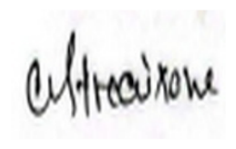
Dataset label: Ceftriaxone
- Gemini 4 Argon
- Ceftriaxone
- Gemini 3.8 Flash
- Ceftriaxone
- Claude Opus 5.5
- Cefuroximeflagged unsure
Opus read a different antibiotic, and flagged it as unsure.
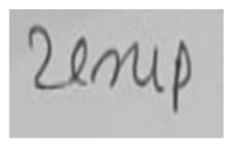
Dataset label: Zenup
- Gemini 4 Argon
- Zenup
- Gemini 3.8 Flash
- Zenup
- Claude Opus 5.5
- not found
Opus left this one out.
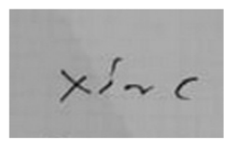
Dataset label: Xinc
- Gemini 4 Argon
- Xinc
- Gemini 3.8 Flash
- xinc
- Claude Opus 5.5
- Zincflagged unsure
Opus read the everyday word, Zinc, and flagged it.
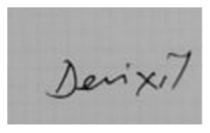
Dataset label: Deixil
- Gemini 4 Argon
- Deanxit
- Gemini 3.8 Flash
- Denixit
- Claude Opus 5.5
- Derixil
Both Gemini models read a different, real drug name. The handwriting itself reads closer to Derixil than to the label.
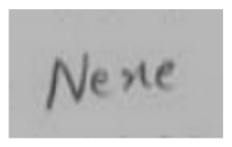
Dataset label: Nexe
- Gemini 4 Argon
- Nene
- Gemini 3.8 Flash
- Nene
- Claude Opus 5.5
- Nexeflagged unsure
Opus read it, and flagged it as unsure; both Gemini models read Nene.
From the public synthetic set: handwriting from RxHandBD (© Md. Masudul Islam, MIT licence), cut from the pages exactly as the models saw them. The real pages stay private. Across the set's 1,560 handwritten words, both Gemini models read 76 that Opus did not; Opus read 30 that neither Gemini model did.
What we think explains the rest
- Brand familiarity. Indian prescriptions are written in brand names. With three or four legible letters, a model that knows the brand list can complete the word; the Gemini models' wrong readings tend to be close spellings, Opus's more often a different word.
- Instruction following. A prompt without the 'never guess' line might let Opus guess more and find more. We have not run it; the prompt stays the same for every model.
Both are hypotheses, not results.
Five things a clinician needs from a reader
Handwriting recall
Every handwritten word on the page, medicines first, against a word-level answer key. A word counts when the reading matches it at 85% character similarity or better, so a one-letter slip in a long name passes and a different drug does not.
Printed fields
Medicines, doses, lab values and dates, including pages printed in Hindi and Tamil. A lab value counts only when the number is exactly right.
Honesty
On a torn or smudged page the model should name the gap, not fill it. A blank page should come back empty. A chart, stamp or photo should be flagged as an image, not transcribed as text.
Reliability
Of the drug names a model lists, how many are really on the page, and lab numbers that differ from the printed value. A model that lists everything it might see finds more and is right less often, so we rank on both and on their balance.
Cost and latency
List price per 1,000 pages on the run date, from each vendor’s published rates and the tokens the call used, and the median seconds per page.
How the sets are built
Synthetic set
Generated prescriptions and lab reports in Indian layouts, with real handwritten medicine names from RxHandBD placed into them. RxHandBD is openly available on Zenodo. The generator, the pages and the answer key are shared with research teams on request.
Handwriting from Islam, Md. Masudul (2026). RxHandBD. Zenodo. doi:10.5281/zenodo.18478741
Private real sets
Lab reports and handwritten prescriptions from an Indian hospital partner, used with consent. The pages are never released and never leave our evaluation environment; we publish scores only.
Answer key for real handwriting
Pages were chosen by a neutral rule: Amazon Textract's handwriting tag, at least 12 handwritten words, spread across source documents. Every model's medicine names were pooled and shown blind to a human reviewer, without model names and in shuffled order. The reviewer confirmed, corrected or rejected each one and added the medicines no model found. 20 of 150 pages had no readable medicine and were set aside. Gemini 4 Argon was run after this review, so the 32 names only it listed were reviewed the same way afterwards; the 4 the reviewer could not decide count against it. The key was built by one reviewer, blind to model names; a second, independent reviewer is planned for v3.
Methodology and limitations
Methodology
- Every model gets the same prompt and must answer in the same JSON contract.
- Vendor-default settings: no tuning per model. A page whose call failed (timeout, throttling, a reply that broke the JSON contract) was run once more; a page that failed again stays a failure and is shown in the table.
- One call per page. A reply that breaks the contract scores zero on that page and is counted as a failure.
- 95% intervals come from a bootstrap over pages. Where we claim one model beats another, we use a paired bootstrap over the same pages: Gemini 3.8 Flash leads Claude Opus 5.5 by 4.0 points of medicine recall on the real pages (95% interval 1.0 to 7.0) and by 3.5 points of handwriting recall on the synthetic set (2.0 to 5.1).
- Cost is the tokens each call used at the vendor's list price on the run date, averaged over the synthetic set. Gemini 3.8 Flash is shown at its introductory price, with the list price after the introduction. Amazon Bedrock reports almost no input tokens for the GPT-6.1 models, so we price their input with OpenAI's published image-token formula for a page this size.
Limitations
- Synthetic pages are cleaner than real scans: no folds, shadows or carbon copies. The real tracks score different things (medicines on a page, lab values), so their numbers are not comparable with the synthetic handwriting recall.
- RxHandBD words are Bangladeshi brand names. They test handwriting, but they are not the Indian brands a prescription here would carry.
- The private sets are small: 130 handwritten and 71 lab pages from one hospital. Read the intervals before reading the ranks.
- The real-handwriting key starts from what the models read, and the reviewer adds what they all missed. A medicine every model and the reviewer missed is not in the key.
- Conflict of interest: RxNote builds products on some of these models. We are not paid by any vendor.
The prompt every model receivedSent with one page image per call, unchanged for every model and every page.
You are transcribing one page of a patient's medical record for a clinician.
Return ONLY a JSON object with these keys:
- "markdown": the full page content as markdown in reading order. Tables as markdown tables. Preserve every drug name, dose, frequency, lab value, unit, date and code verbatim. Transcribe handwriting as best you can. Describe any chart, photo, stamp or signature in one line in square brackets, e.g. [chart: fasting glucose trend, values 120, 135, ...].
- "language": "en", "hi", "ta", "mixed" or "none".
- "legibility": "readable" if you could read everything, "partial" if some region could not be read, "unreadable" if most of the page could not be read, "empty" if the page is blank.
- "unreadable_regions": list of short descriptions of any region you could NOT read reliably (blurred, blacked out, illegible handwriting). Empty list if none. Never guess at content you cannot read; name the gap instead.
- "medications": list of {"name","dose","frequency"} found on the page (strings, verbatim).
- "labs": list of {"analyte","value","unit"} found on the page.
- "dates": list of dates found, as written.
- "handwritten_words": list of the handwritten words you transcribed, in order (empty if no handwriting).
- "image_described": true if the page contains a chart, photo, stamp or signature that you described.
No prose outside the JSON.
Cite this benchmarkBibTeX for the version on this page.
@misc{rxnote_readbench_v2_2026,
  title        = {RxNote Read-Bench v2: how well AI models read Indian medical records},
  author       = {El Farssi, Amine and {RxNote}},
  year         = {2026},
  howpublished = {\url{https://rxnote.ai/benchmark}},
  note         = {Version v2, run 2026-11-06}
}
Run it on your own model
We can score your model on the private sets without the pages leaving our environment, and share the synthetic set, its generator and its answer key with research teams.
Score your model on the private sets